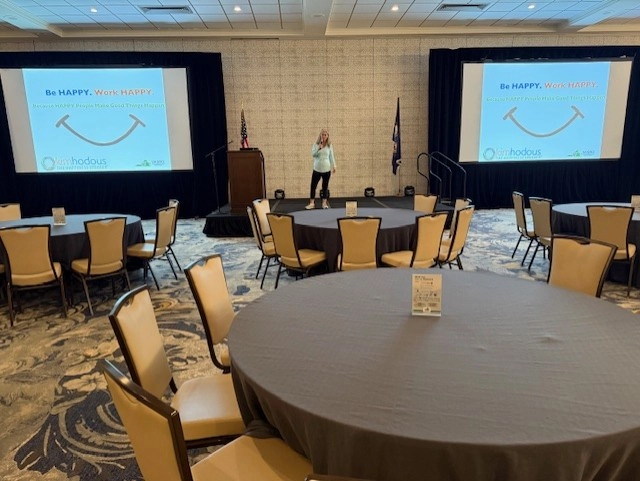
One of the first things I do when I arrive at a speaking engagement has nothing to do with my keynote.
I find the AV technician.
Before I check my slides.
Before I test the mic.
Before I walk the stage.
I ask their name.
I shake their hand.
I thank them.
I don’t use many slides — maybe six, and they’re mostly images of my family that support a story I’m telling. But none of it works without the person running the sound and screens behind the scenes.
And I’ve noticed something over the years.
When I thank them from the stage — when I flip to my first slide and say, “This looks great — thank you, Josh” — you can physically see the shift.
They sit up taller.
Their shoulders square.
Their posture changes.
It’s subtle.
But it’s real.
And it happens every single time.
Every Event Has an AV Tech
Every event has someone behind the scenes making it work.
The AV technician.
The registration desk.
The person running logistics.
The quiet problem-solver.
And every team has the same thing.
The steady contributor.
The detail person.
The one who fixes issues before anyone notices.
The one who doesn’t ask for credit.
When those people are invisible, morale erodes quietly.
When they are acknowledged, posture changes.
Energy shifts.
Confidence rises.
And that emotional shift is one of the clearest building blocks of workplace happiness.
Belonging isn’t built by doing more.
It’s built by noticing who’s already doing so much.
It’s the same principle that keeps morale steady during seasons of change.
The Science of Feeling Seen
Research consistently shows that employees who feel recognized and valued are more engaged, more productive, and less likely to leave.
Belonging reduces turnover.
Belonging increases discretionary effort.
Belonging builds trust.
And trust is foundational to building happier teams.
Belonging is often built through small, consistent acts of kindness.
Not dramatic ones.
Human ones.
A sincere thank you.
Giving credit in a meeting.
Actually listening without multitasking.
Bringing someone into the conversation who hasn’t spoken.
Kindness isn’t soft.
It’s structural.
Just like engagement in a keynote, small moments create lasting impact.
Culture Is Built in Micro-Moments
Most organizations don’t struggle because people lack talent.
They struggle because people feel unseen.
Belonging isn’t created by a retreat.
Or a slogan.
Or a values statement on a wall.
It’s created in micro-moments.
In names remembered.
In credit given publicly.
In gratitude expressed specifically.
When someone who is typically behind the scenes is acknowledged, something shifts.
Not just in them.
In the room.
And when rooms shift consistently, culture shifts.
And culture is what ultimately determines whether people feel happy coming to work.
Try This
Tomorrow, look for your “AV tech.”
Not literally.
But the person who makes things work quietly.
Acknowledge them.
Specifically.
Publicly if appropriate.
Then watch what happens.
You might change their day.
You might change the tone of the room.
And you might build belonging in a way no policy ever could.
Author Bio
Kim Hodous, CSP®, is a keynote speaker who helps associations and organizations build happier, healthier work cultures through practical habits rooted in research. Known for her thoughtful customization, high-energy delivery, and engaging storytelling, Kim blends energy, habits, and connection to help teams increase engagement, reduce burnout, and drive better results.
Planning a conference? Learn more about bringing Kim to your next event.