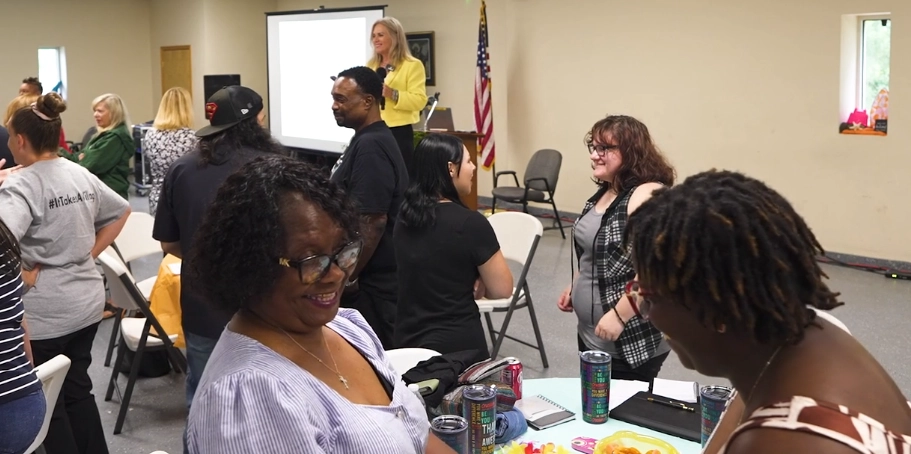
At the end of my signature keynote, I ask the audience to stand up and find a partner.
It’s intentional. I save it for the end.
Because I don’t want them just informed.
I want them connected.
I call it my A and B Partner Activity.
Partner A shares something they’re genuinely good at — something they bring to their team or organization.
Partner B’s job?
Celebrate them.
Not politely. Not mildly.
Actually celebrate them. Tell them how great they are at what they do.
Then they switch.
The first 20 seconds are usually a little tentative.
Then it shifts.
Voices get louder.
Shoulders relax.
Laughter rises.
And sometimes — especially with women’s audiences — I see tears.
Not dramatic tears.
But that quiet, unexpected kind that comes when someone feels genuinely seen.
I’ve watched people hug each other in a way that would probably make HR shudder — not inappropriate, just deeply human.
Because when we build each other up, something powerful happens.
That’s how leadership is built.
That’s how teams are built.
That’s how culture is built.
And I can stand up there and talk for an hour.
But it’s often in that 30 seconds of someone feeling seen and heard that the real shift happens.
That’s the moment they remember.
That’s the moment they take home.
No silk scarves or fake bunnies required.
[ Insert engagement clip here]
Why We Remember What We Feel
Most people think a keynote is memorable because of information.
It isn’t.
It’s memorable because of emotion.
When audiences participate, celebrate, laugh, or feel acknowledged, the brain releases dopamine — a neurotransmitter associated with attention, reward, and memory formation.
And those emotional moments are what build happier teams over time.
Dopamine is the brain’s way of saying:
“This matters. Keep this.”
Information alone rarely triggers it.
Connection does.
Emotion does.
Feeling seen does.
That’s why someone can sit through a slide-heavy presentation and forget most of it by the next morning.
But they remember the moment someone looked them in the eye and said,
“You’re really good at that.”
Being seen is why people stay.
The Novelty Bias Advantage
We are wired for novelty.
It’s called novelty-seeking bias — our brains pay attention to what feels new or unexpected.
When something different happens in a session — movement, interaction, celebration, shared vulnerability — attention increases.
Retention increases.
Energy increases.
A keynote that is purely informational asks people to stay still and absorb.
A keynote that is interactive invites them to engage.
And engagement builds memory.
What This Means for Your Conference
Meeting planners often say, “We want this year to feel different.”
Different doesn’t mean louder.
It doesn’t mean gimmicky.
It means intentional.
It means creating moments where people:
- Feel acknowledged
- Celebrate each other
- Strengthen connection
- Experience something together
Because being seen and being heard is why people stay.
And feeling seen is one of the most powerful drivers of workplace happiness.
It’s why members remain engaged.
It’s why leaders earn trust.
When attendees leave with more than notes — when they leave feeling valued — that momentum travels home with them.
That’s how a single keynote contributes to building happier teams and better results long after the event ends.
And that’s what makes a conference memorable.
The Difference Between Content and Impact
You can deliver information.
Or you can design experience.
Information fills notebooks.
Experience shifts energy.
When I design a keynote, I think about structure the way my dad thought about his magic shows:
There’s an opening.
There are clear movements.
And there’s a meaningful wrap-up.
But in between?
There are moments.
Moments where people feel seen.
Moments where connection is built.
Moments that last longer than any slide ever could.
Ready for a Keynote Your Audience Will Actually Remember?
If you’re planning a conference and want your audience energized, connected, and fully engaged — not just informed — let’s talk.
Author Bio
Kim Hodous, CSP®, is a keynote speaker who helps associations and organizations build happier, healthier work cultures through practical habits rooted in research. Known for her thoughtful customization, high-energy delivery, and engaging storytelling, Kim blends energy, habits, and connection to help teams increase engagement, reduce burnout, and drive better results.
Planning a conference? Learn more about bringing Kim to your next event.