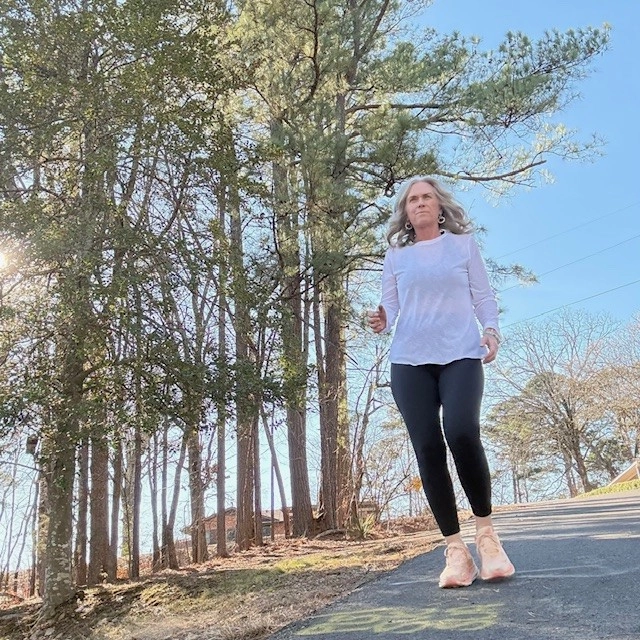
On Sunday afternoons, I usually take a walk and call a friend.
She lives a thousand miles away. We started as business connections years ago, and somewhere along the way it became something deeper. Now we talk a couple times a month — always on the phone, usually while I’m moving.
It’s one of my favorite little rituals.
If I know we’re going to talk, I lace up my shoes at the same time. The miles go faster when there’s laughter in your earbuds.
This past Sunday, though, the laughter wasn’t there.
She was lonely.
Not dramatically lonely.
Not crisis lonely.
Just the quiet, heavy kind.
The kind where everything looks fine on the outside… but feels heavier than it should.
When I got home, I kicked off my shoes, poured a big glass of water, and just stood in my kitchen for a minute.
And I thought:
This is happening to more people than we admit.
The Myth of Hyper-Independence
Somewhere along the way, we decided that needing people was weakness.
That if we were doing life “right,” we wouldn’t rely on anyone.
We’d handle it.
We’d power through.
We’d be strong.
Independence became the gold standard.
But here’s the truth:
Human beings are wired for connection.
For most of history, survival depended on community. We worked together. Raised children together. Showed up for one another in hard seasons and joyful ones.
Then COVID happened.
We got used to distance.
Used to screens.
Used to handling things alone.
We told ourselves:
“I shouldn’t need anyone.”
But needing people isn’t weakness.
It’s humanity.
And connection is one of the simplest, most reliable drivers of happiness we have access to.
Loneliness Is More Common Than We Think
Research from the Making Caring Common Project at Harvard found that 36% of adults report serious loneliness.
That’s more than one in three people.
Which means if you feel lonely sometimes…
You’re not unusual.
You’re human.
Loneliness doesn’t always show up as isolation.
Sometimes it looks like:
Being busy but unseen.
Being surrounded but not known.
Being capable but unsupported.
And we often mistake exhaustion for overwork — when it’s actually disconnection.
Strong Is Great. Connected Is Better.
Independence is impressive.
But connection is protective.
People lighten the emotional load.
They remind us we’re not the only ones navigating hard things.
They steady us.
They energize us.
They help us feel seen.
Feeling seen is foundational to personal and workplace happiness.
And being seen is why people stay — in relationships, in workplaces, in communities.
It’s also why belonging inside teams changes performance.
Connection isn’t a luxury.
It’s a habit.
And small habits, practiced consistently, shape the tone of our days more than we realize.
Sometimes it looks like a long Sunday walk with a friend on the phone.
Sometimes it looks like texting first.
Sometimes it looks like letting someone know you’re not fine — even if you could pretend to be.
Maybe It’s Not About Doing More
If life feels heavier lately…
If you’re more tired than usual…
If joy feels harder to access…
It might not mean something is wrong with you.
It might just mean you’re trying to do too much alone.
Maybe today isn’t about pushing harder.
Maybe it’s about reaching out.
You don’t have to be this strong alone. 💛
Author Bio
Kim Hodous, CSP®, is a keynote speaker who helps associations and organizations build happier, healthier work cultures through practical habits rooted in research. Known for her thoughtful customization, high-energy delivery, and engaging storytelling, Kim blends energy, habits, and connection to help teams increase engagement, reduce burnout, and drive better results.
Planning a conference? Learn more about bringing Kim to your next event.