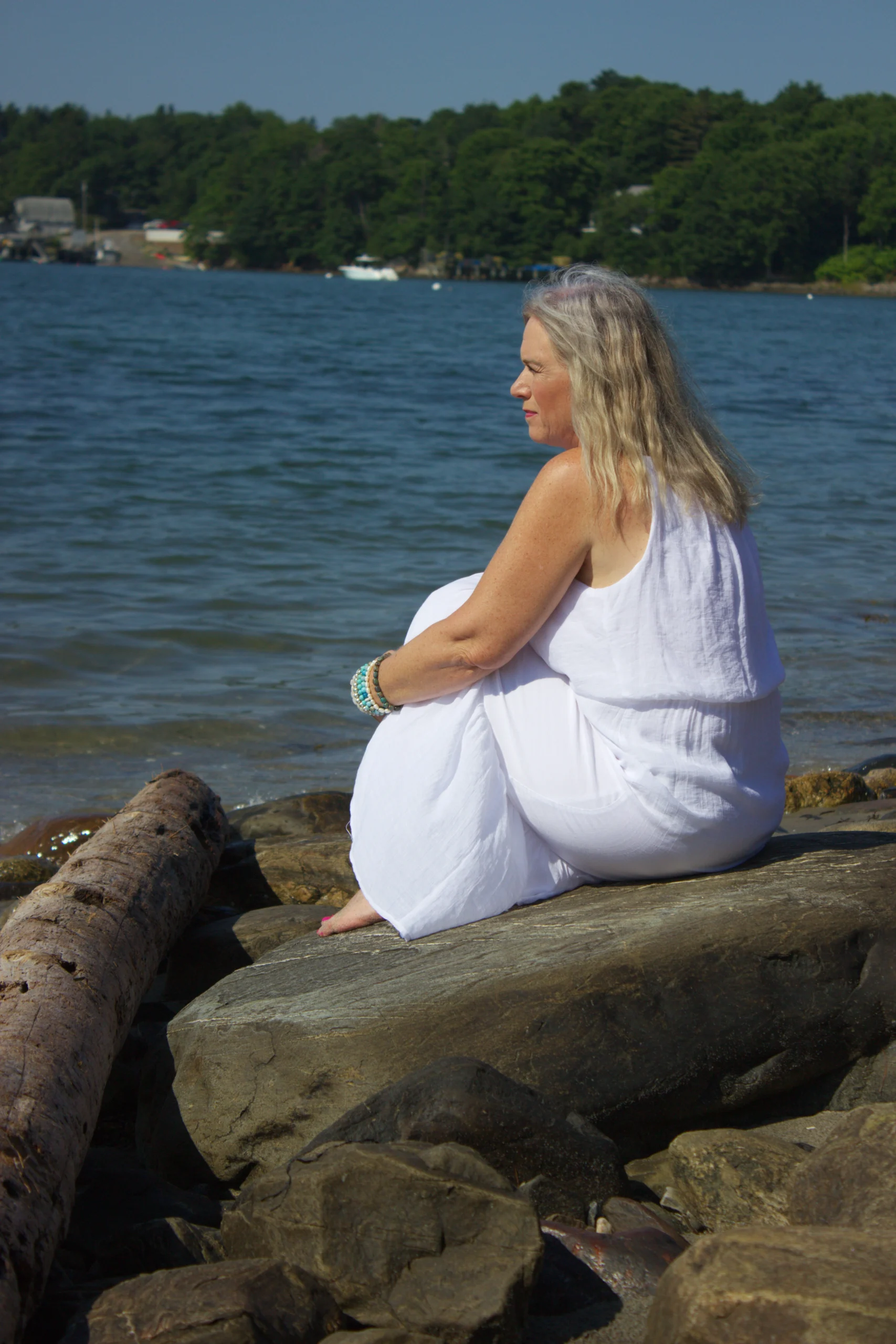
For as long as I can remember, summer meant Maine.
In fact, this summer I’ll turn 63 — and I’ve been to Maine 63 summers. I’ve never missed one.
When we were kids, we’d pile into our battered station wagon and drive for what felt like forever. And every single year, when we crossed over the Portsmouth Bridge, we’d roll down all the windows and breathe deeply.
That first rush of salt air was our signal.
We’re almost there.
You could smell the ocean before you could see it.
To this day, that scent still feels like home.
On paper, it sounds like the definition of rest:
Ocean air.
Family cottage.
Fresh seafood.
Front porch mornings.
But here’s the part no one sees.
More often than not, I would come home from Maine more exhausted than when I left.
Because while the salt air was restorative, the emotional bandwidth was not.
My parents lived in Maine. We lived in Arizona. We usually saw each other only once a year. So there was this quiet pressure — unspoken but real — that I should spend as much time as possible with them.
At the same time, my husband and kids were on “family vacation,” which meant I should be fully present with them.
Everyone wanted time.
Everyone deserved time.
And I was in the middle.
So instead of resting, I was managing expectations.
Instead of restoring energy, I was juggling emotional responsibility.
And I’d get home thinking, Why am I more tired now?
That’s when I learned something important.
Burnout isn’t always about time off.
Sometimes it’s about what’s happening underneath.
And burnout is one of the fastest ways to erode happiness — even in people who genuinely love their work.
The Invisible Load
For me, Maine wasn’t exhausting because of the travel.
It was exhausting because of the invisible weight I was carrying.
The emotional math.
How long have I sat and talked with my parents?
Have I given enough time to the kids?
Is my husband feeling included?
Am I disappointing someone else right now?
No one was demanding it out loud.
But I felt it.
And that kind of exhaustion doesn’t disappear when you change zip codes.
Emotional burnout happens when you are:
- Managing everyone else’s expectations
- Absorbing tension in the room
- Trying to be fully present in too many directions
- Carrying responsibility no one asked you to carry — but you picked up anyway
It’s the kind of tired that sleep doesn’t fix.
It’s the kind of tired that follows you home.
Why Rest Alone Doesn’t Solve It
Rest restores the body.
But burnout often lives in the nervous system.
When we’re constantly anticipating, adjusting, accommodating, or performing emotional labor, our system never fully powers down.
Even on vacation.
Even by the ocean.
Even with lobster rolls and salty air.
Because the exhaustion isn’t from activity.
It’s from vigilance.
And vigilance doesn’t clock out just because you packed a suitcase.
What Actually Helps
The shift for me didn’t come from better vacations. (What’s better than Maine in the summer?)
It came from better boundaries.
From asking quieter questions:
What is mine to carry?
What isn’t?
Where am I over-functioning?
Where am I assuming responsibility that was never assigned to me?
Burnout began to soften when I stopped trying to manage everyone’s experience and started honoring my own.
When I gave myself permission to say:
“I’m going to sit here for 20 minutes and drink my coffee.”
“I’m going to walk to the shore. You can come or not. I’m okay with either.”
“I’m not responsible for making this vacation perfect.”
That wasn’t selfish.
It was sustainable.
Because sustainable energy is foundational to long-term happiness.
If You’re the One Everyone Depends On
If you’re the steady one in the room…
If you’re the one who makes everything work…
If you’re the one who notices what needs to be done and just does it…
Then you know this kind of tired.
It’s not loud.
It’s not dramatic.
It’s quiet.
It’s the fatigue of always scanning.
Always adjusting.
Always smoothing.
Always holding.
You can be incredibly capable and incredibly exhausted at the same time.
That’s emotional burnout.
And no vacation fixes that by itself.
Sustainable Energy Isn’t About Escape
It’s about being honest about what you can carry.
Letting others carry their share.
Asking for acknowledgment instead of silently hoping for it.
Allowing connection to replenish you.
Giving yourself permission to pause without guilt.
Rest is important.
But sustainable energy is built in ordinary moments — not just special ones.
Protecting your energy isn’t indulgent — it’s how happiness becomes sustainable instead of seasonal.
Rest is important.
But sometimes what we’re really craving isn’t escape.
It’s relief.
Relief from carrying more than is ours.
Relief from managing everyone’s expectations.
Relief from being the steady one without being supported in return.
Maybe burnout isn’t asking for a plane ticket.
Maybe it’s asking for honesty.
For boundaries.
For acknowledgment.
For shared responsibility.
For someone to say, “You don’t have to hold all of this alone.”
I still roll down the windows when I cross the Portsmouth Bridge.
I still breathe in the salt air.
But now I pay attention to what I’m carrying with me.
And sometimes, the most restorative thing I can do isn’t travel somewhere new.
It’s put something down.
Author Bio
Kim Hodous, CSP®, is a keynote speaker who helps associations and organizations build happier, healthier work cultures through practical habits rooted in research. Known for her thoughtful customization, high-energy delivery, and engaging storytelling, Kim blends energy, habits, and connection to help teams increase engagement, reduce burnout, and drive better results.
Planning a conference? Learn more about bringing Kim to your next event.